

 8 months ago
86
8 months ago
86

Our ancestors, who made Anatolia—the land surrounded by seas—their home, endowed future generations with such a great homeland.
Despite establishing an empire on three continents and despite the geopolitical requirements of their political geography, the Ottomans could never comprehend the vital importance of naval power except during the 16th century. Thus, the empire not only failed to geopolitically distance itself from the seas but also failed to become a maritime civilization.
In our historical lag in maritime affairs, the commercial capitulations granted to maritime states during the empire’s strongest period played as significant a role as our general stagnation in science and technology. While the powers that imposed those capitulations expanded across the oceans and grew rich through new colonies, they prevented other players from entering this competitive maritime environment. They did everything in their power to ensure that Turks would not become seafarers and would not grow strong at sea. Our naval history is filled with treacherous attacks by maritime powers—Çeşme, Navarino, and Sinop being among the most prominent examples. Unfortunately, most of those who carried out these attacks are our allies today. A similar assault was carried out through FETÖ between 2008 and 2016.
A nation without a navy ultimately loses its homeland. Decline at sea and the absence of a strong navy caused successive losses of territory and population as the empire stagnated and collapsed, culminating in the invasion of Anatolia—bringing the Turks to the brink of statelessness for the first time in history. Had Sèvres been realized, the Turkish nation would have been condemned to herding sheep in hot deserts. It was saved by the War of Independence under Mustafa Kemal Atatürk’s leadership.
The establishment of Greece; the loss of Cyprus after the 1877–78 War; the loss of the Aegean islands in the Balkan Wars; and finally, the transfer of the Dodecanese to Greece after World War II—all were components of a strategy to detach Turkey from the seas. The Sèvres map which was imposed on Ottomans after the World War I, envisioned a Turkey cut off from the open seas and oceans, contained on all sides, and buried inland so that the Turks would never again pose a threat to Europe.
Turkey responded decisively to Sevres map—first with the War of Independence and the Treaty of Lausanne, then with the Montreux Convention and the incorporation of Hatay into the homeland. Yet imperialism, after Atatürk’s death, reminded us repeatedly that it had never abandoned its goals. Today, we witness the persistent continuity of imperialism—from Syria to Libya, from Iraq to Azerbaijan, and from the Black Sea to the Aegean and Eastern Mediterranean—manifesting through every kind of provocation and threat.
NATO and Imperialism
Turkey’s entry into the Euro-Atlantic bloc in 1946 and its accession to NATO in 1952 placed Anatolian geopolitics at the service of imperialism. Turkey was expected to halt Soviet divisions on land with its cheaply equipped soldiers; in the air, if necessary, it would fulfill duties involving nuclear weapons according to Washington’s plans. At sea, Turkey’s role was confined to the Black Sea.
Imperialism does not tolerate new maritime competitors. Turkish naval power, therefore, was expected to remain coastal. This situation also served the interests of the domestic ruling elite captivated by Western influence. For example, when NATO zones of responsibility were allocated in the surrounding seas, we were so negligent that we effectively ceded the Aegean and Eastern Mediterranean to Greece. Had the Cyprus crisis of 1963 not occurred, Turkish leaders—dazzled by NATO’s shine—would never have considered conducting naval exercises in the Mediterranean and the Aegean.
The awakening of the Naval Forces began with the Bloody Christmas events in Cyprus in 1963, and eleven years later, on July 20, 1974, Turkey secured its second victory against imperialism after the War of Independence. On that day, the imperialist encirclement from the south was broken. From then on, the vital rights and interests of the Navy in the Aegean and Mediterranean became indispensable priorities to be protected and advanced.
Towards the High Seas
Over the years—especially after the Cold War—Turkey achieved significant developments that placed it on the path toward becoming a maritime civilization, primarily through its navy. This transformation accelerated following the introduction of the Towards the High Seas doctrine in 1994. This successful trajectory manifested in the Republican Navy’s gunboat diplomacy in the Aegean and Mediterranean and, in the Black Sea, through effective naval diplomacy that generated a quantum leap.
Since 2009, the Navy’s continuous presence in the Indian Ocean further accelerated the process. In 2011, the realization of the nationally designed TCG Heybeliada corvette—built at the Istanbul Pendik Shipyard with 70% national contribution—crowned this achievement.
Unfortunately, the reward for these successes came in the form of political conspiracies—Ergenekon, Kafes, Poyrazköy, Sledgehammer, and Military Espionage—conducted before the very eyes of the government, parliament, opposition, and high command. The Turkish Navy had to be disciplined and weakened. Forty admirals and 400 officers and sailors from this superb navy—whose command structure and capabilities were the pride of the nation—were purged through fabricated evidence and slander and were imprisoned. This darkest period in Turkish naval history began to close after 2014, as the government remembered its responsibility to govern the state and protect national interests.
Following the FETÖ coup attempt of July 15, 2016, Turkey’s reflex to defend its geopolitical and national interests changed markedly. The struggle over maritime jurisdiction areas in the hydrocarbon-rich Eastern Mediterranean played the most decisive role in this shift. The name of this new process came to prominence through the Blue Homeland concept, which I coined in 2006. The Turkish people embraced this concept enthusiastically, and public interest in the navy grew exponentially.
Despite the deep wounds inflicted by the conspiracy cases, the Naval Forces achieved remarkable success in the Aegean and Mediterranean and acted as a locomotive for the development of the national defense industry. This momentum grew in an environment shaped by rapid information flows—especially through social media—and by rising geopolitical maritime conflicts. The Blue Homeland became the concrete symbol of this awakening.
What Is the Blue Homeland?
The Blue Homeland is simultaneously a definition, a symbol, and a doctrine.
As a definition, it encompasses all Turkey’s declared or undeclared maritime jurisdiction areas (internal waters, territorial waters, continental shelf, Exclusive Economic Zone), as well as rivers and lakes.
The Blue Homeland is literally the extension of our strategic sovereignty over the seas and sea beds between 26°–45° East longitudes and 36°–42° North latitudes. It denotes our jurisdiction and interests over the fresh and saltwater masses between 25°–45° East longitudes and 33°–43° North latitudes.
As a symbol, it represents the maritimization of Turkish State and Turkish Nation. It is the maritime future that Turkey must pursue as a high strategic objective in the 21st century. It symbolizes redirecting Turkey’s centuries-old, landlocked mentality toward the sea and maritime affairs, thereby enabling the Turkish people to become a seafaring nation.
As a doctrine, it is a geopolitical roadmap designed to protect and develop Turkey’s rights and interests in the seas surrounding Anatolia and in adjacent oceans and seas. The unique principles and realities of the maritime domain are thus transformed into a guiding doctrine within a coherent geopolitical framework, allowing us to define our future through spheres of influence and defense axes.
In the transition from a unipolar to a multipolar world order—from the Atlantic Age to the Asian Age—the Eastern Mediterranean offers new avenues of opportunity that can enhance Turkey’s geopolitical control over the Aegean, Black Sea, and Straits. It can open new windows of opportunity and transformation in Turkey’s global, continental, and regional relations. Naturally, this doctrine requires Turkey to dominate maritime jurisdiction areas legitimized by international law and to possess the capability and will to employ geopolitical, political, diplomatic, military, and economic instruments on land and in the air to support its maritime claims.
The Blue Homeland Is Above Politics
The Blue Homeland belongs to the domain of Grand Strategy. It defends an independent foreign and security policy. It provides a defensive-realist framework against the aggressive-realist policies of the EU and the USA. It avoids permanent alliances and blocs; yet, based on the principle that “states have no permanent enemies or friends—only interests,” it remains open to temporary alliances and cooperation to protect our maritime rights and interests.
It is aligned with Atatürk’s principles of upholding internal and external peace. It is environmentalist, recognizing that marine and ocean ecology is the main determinant of the planet’s natural cycle. It advocates equitable and just sharing in disputed areas based on international law, rights, and proportionality. However, it unequivocally rejects maximalist maps such as the Seville Map.
It Rejects the Second Sèvres at Sea
The Blue Homeland is a paradigm that must be implemented regardless of which political party governs Turkey. In fact, it is the continuation of a process initiated by Mustafa Kemal Atatürk. His restoration of full sovereignty over the Turkish Straits through the Montreux Convention was the first step of this process. The 1974 Cyprus Peace Operation, as well as the Aegean Continental Shelf, Territorial Waters, and Kardak crises, constitute successful milestones.
Today, however, we face a stark reality: in the Aegean and Eastern Mediterranean, imperialism—through the Greek Cypriot Administration and Greece—seeks to seize roughly 200,000 square kilometers of Turkey’s maritime space (50,000 km² in the Aegean and 150,000 km² in the Mediterranean). For this reason, we define this process symbolized by the Sevilla Map as a Second Sèvres.
In response, ensuring geopolitical awareness and understanding of this threat is essential. The maritime jurisdiction areas that constitute roughly 462,000 square kilometers of the Blue Homeland not only provide economic potential but also grant our peninsular state a deep defensive and geopolitical maneuvering space.
We must remember that the Blue Homeland today is the maritime equivalent of the National Pact on land. It is the second front of Atatürk’s directive: “Your First Target is the Mediterranean.”
For Turkey—inevitably becoming a maritime state in the 21st century—the Blue Homeland is the extension of our geographic sovereignty into the seas.
Tearing Up the Second Sèvres Through the Blue Homeland
The Turkish nation—having achieved liberation and state-building in a brief period after tearing up Sèvres in the 1920s—must now repel the maritime invasion attempt in the Aegean and Eastern Mediterranean in the 21st century. This can only be achieved through a non-partisan national consensus.
The Blue Homeland exists today as a complete doctrine. However, the government must support it with military, diplomatic, and economic sub-strategies, coordinated with the opposition and parliament, and crystallize them into a long-term policy document. The doctrine must not be implemented through daily political decisions but through an institutional guide with the authority of a national security strategy.
The Second Sèvres threat we face at sea, one hundred years after the first, can only be torn apart through social consensus, national unity, and collective resolve.
*
Click the share button below to email/forward this article. Follow us on Instagram and X and subscribe to our Telegram Channel. Feel free to repost Global Research articles with proper attribution.
This article was originally published on Mavi Vatan.
Ret Admiral Cem Gürdeniz, Writer, Geopolitical Expert, Theorist and creator of the Turkish Bluehomeland (Mavi Vatan) doctrine. He served as the Chief of Strategy Department and then the head of Plans and Policy Division in Turkish Naval Forces Headquarters. As his combat duties, he has served as the commander of Amphibious Ships Group and Mine Fleet between 2007 and 2009. He retired in 2012. He established Hamit Naci Blue Homeland Foundation in 2021. He has published numerous books on geopolitics, maritime strategy, maritime history and maritime culture. He is also a honorary member of ATASAM.
He is a Research Associate of the Centre for Research on Globalization (CRG).
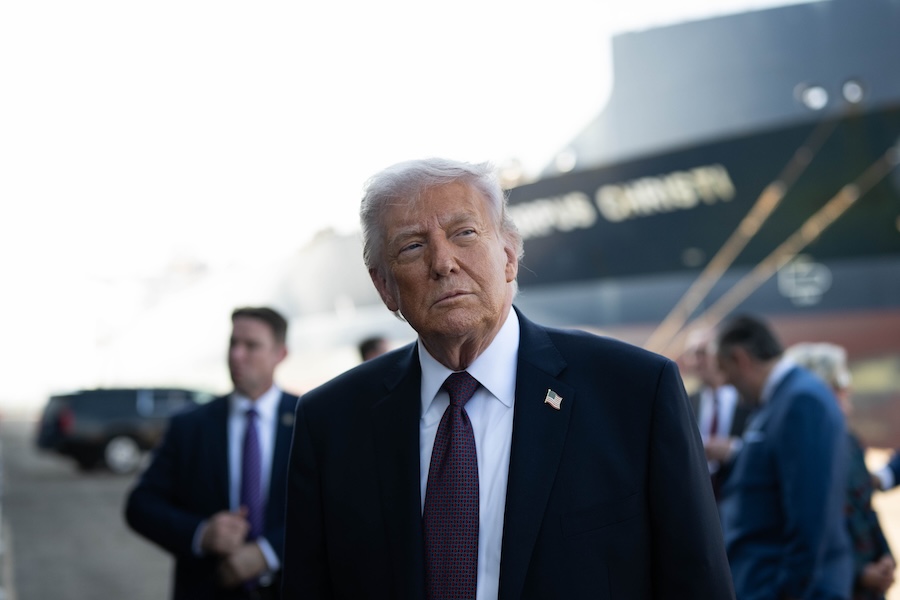
Featured image is from the author
Global Research is a reader-funded media. We do not accept any funding from corporations or governments. Help us stay afloat. Click the image below to make a one-time or recurring donation.















.png)






.jpg)



 English (US) ·
  French (CA) ·