

 1 day ago
2
PROTECT YOUR DNA WITH QUANTUM TECHNOLOGY
Orgo-Life the new way to the future Advertising by Adpathway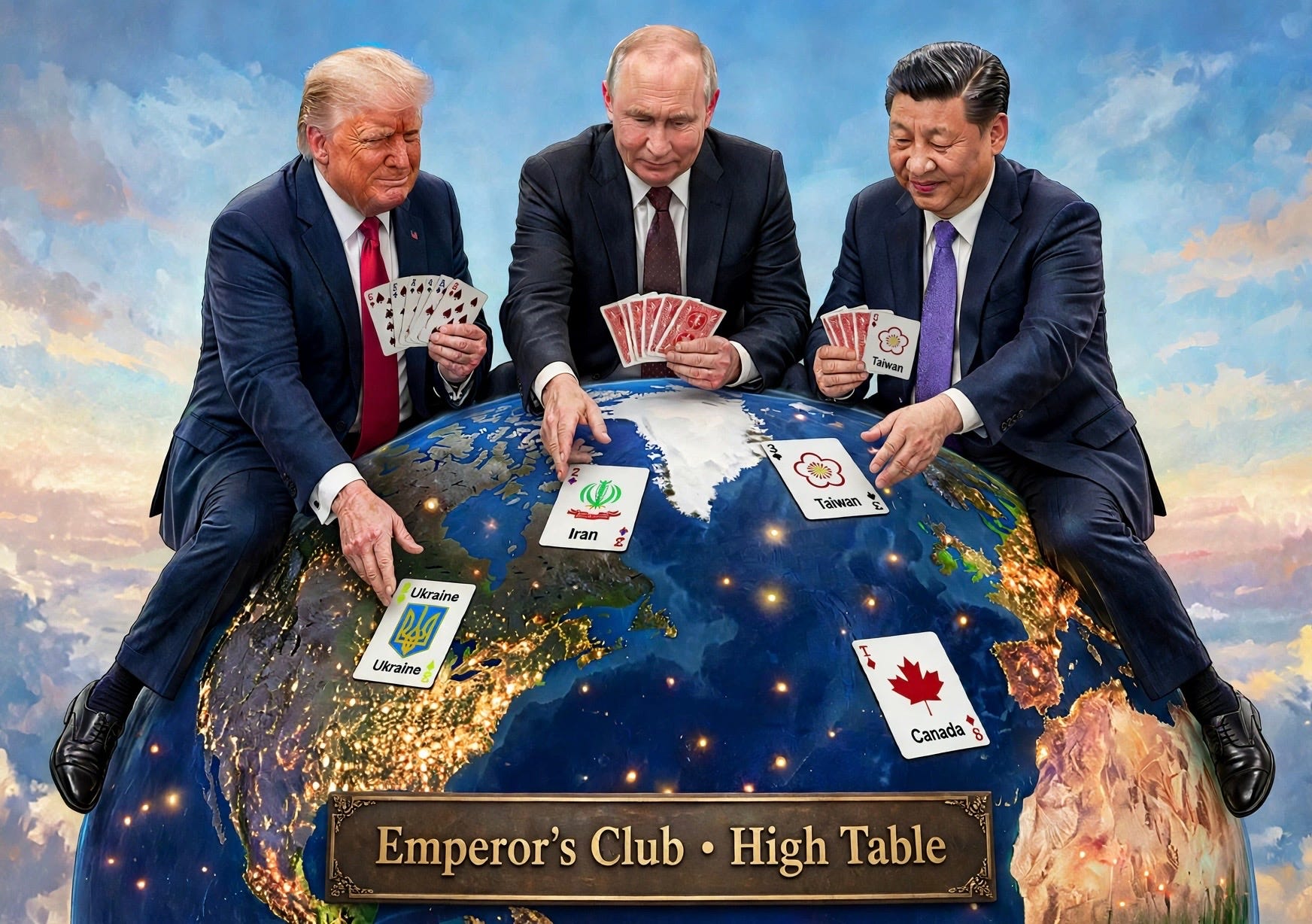
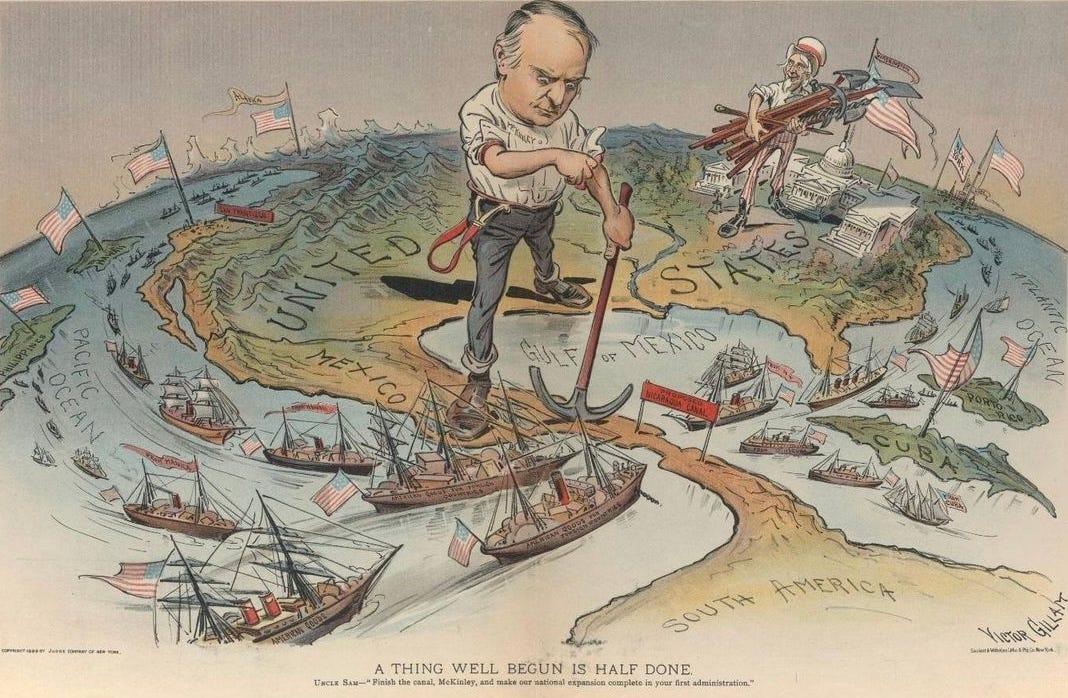
It is not much noticed these days — and even less discussed, but the US has been a player in the empire game for more than a century. It’s been a decent run. The key date is December 10, 1898, when a peace treaty between the US and Spain was signed, ending the Spanish-American War.
That’s one way to get started — win a showdown with another empire and take some spoils.
Technically, Spain gave Cuba — their prize possession — its independence. But it was actually under US control for the next 60 years, Cuba’s constitution was amended to authorize the US to intervene unilaterally in domestic affairs and provided a perpetual lease for Guantanamo Bay. The Philippines became America’s biggest colony, and Filipinos were classified “non-citizen US nationals.”
The new empire also acquired most of Spain’s remaining imperial possessions. That included Puerto Rico, parts of the West Indies, and Guam. By the end of the war, the US had gained more than 7,000 islands holding 8.5 million people. Counting Alaska, the colonies now covered an area as large as the US had been in 1784, with a population nearly twice its size.
In less than four months the US had defeated one of the so-called “great powers” and acquired significant colonial possessions. An anti-imperialist movement protested for more than a decade, but after World War I, the national “return to normalcy” encouraged forgetting about its imperial status, meanwhile applying different laws and rules to so-called “foreign” populations.
Gradually, the US became first among three nations with the ability to project power globally. Later, a new label was coined — “superpower,” a handy euphemism connected with possession of a vastly superior arsenal — which avoided mentioning its imperial status. In addition to the Soviet Union, the British empire still fit the definition in 1944. Now China does. There are currently just two superpowers, unless you still count Russia.
In recent years, however, the US empire has entered a period of decline. Its citizens are polarized and distrustful, basic ideals have been challenged and violated. It has alienated allies. Its Capitol has been attacked and vandalized by its own people. The Constitution and much-touted “rule of law” often fail.
A return to “normalcy” doesn’t look likely this time. Millions of people have lost faith, and so much has changed. Perhaps the worst can still be avoided. But the barbarians are inside the gates.
Checklist for Autocracy
The situation shouldn’t be shocking. Empires follow predictable trajectories. If you want to seize power, for instance, the first step is to stoke division. Thanks to Trump and the Internet, Check.
History illustrates that while genuine grassroots movements are built on tolerance and mutual aid, creating an imperial or autocratic order relies on exaggerating differences, deepening resentments, and manufacturing enemies — both foreign and domestic. The current enemies list, created by Trump but echoed by most Republicans, includes almost anyone who isn’t white, Christian, and blindly obedient. Check.
Dictators create coalitions of grievance by turning convenient groups into existential threats. This is often combined with seductive, often nostalgic promises of prosperity, glory, efficiency and order — a police state sold as fair and reasonable payback. In an imaginary “golden age.” Check.
In the long term, what emerges is hollowed-out democracy. Or some form of tyranny.
From the descent of the Roman Republic into absolute authority under Augustus to the modern evolution of the American corporate state, the primary objective of building an empire has been the accumulation of wealth and power by the few at the expense of human values and self-determination of the many.
The modern imperial game requires considerable flexibility and the active construction of bespoke laboratories for autocracy and mass amnesia. When a leader insists on renaming things (mainly in his own honor), declares the press an “enemy of the state,” and bans news organizations over unfavorable reporting, he’s attempting to shape the narrative. Tactical options are unlimited.
Empires rely heavily on perception management and the complicity of legacy media to sustain their illusions. By dominating attention (often with distractions) and privatizing key operations, the modern imperial state depresses aspirations. leaving citizens feeling isolated, bankrupt, and insecure.
In the current era, empires operate through oligarches, opaque bureaucracies, and corporate-military alliances. The myths of militarism and preventive war are usually sold to the public under the guise of duty, national survival and spreading democratic capitalism. The outcome is waning trust in institutions, “expertise,” and each other. Check.
Now a new breed of tech-bro oligarchs promotes the belief that corporate innovation will save humanity. This technocratic centralization, technocracy, or techno-fascism, merging business and government interests, further alienates most people, reducing all human activities to metrics of management and control. So far, the sales pitch is falling flat. But we’ll see.
Imperial Problems
The pattern has repeated across centuries. Following the assassination of Julius Caesar, his nephew Augustus tracked down the conspirators under the banner of revenge. When the dust settled, representative democracy was systematically dismantled, replaced by a centralized authority where a dictator wielded absolute control.
Once an empire has been built, however, maintenance can become a problem and a key to its longevity. While bringing Rome enormous wealth, power, and prestige, expansion ultimately helped bring about its downfall.
An excellent road system contributed to trade and mobility, military and otherwise, much like America’s infrastructure. Both the US Interstate Highway system and the Internet were initially designed with military purposes in mind. But the difficulties of maintaining the infrastructure of a vast empire weighs heavily and has unanticipated costs and impacts. In Rome’s case, both the treasury and administration were seriously overstretched by domestic instability and persistent attacks from foreign forces.
In the US, aging physical infrastructure is becoming a serious liability and exploitation of cyberspace, especially through artificial intelligence and cryptocurrency, may create uncontrollable risks and drain resources.
Trump’s grandiose schemes for expansion by annexing or otherwise acquiring territories like Canada or Greenland have challenged alliances and increased tensions. So has his courting of Russia’s Putin and China’s Xi Jinping for an ad hoc global triumvirate, ostensibly to settle conflicts and define new spheres of influence.
The Roman Empire had two triumvirates, the first a secret alliance between Julius Caesar, Pompey and Crassus, who divided power between them, based on spheres of influence, commands, and political perks to satisfy their individual goals. After Crassus died, Caesar and Pompey turned on each other. But once Pompey was out of the way, it wasn’t long before the Senate turned on Caesar.
The second triumvirate included Caesar’s heir, Octavian, Mark Antony and Marcus Lepidus. But Octavian forced Lepidus into retirement and went to war with Antony. Once Antony and Cleopatra were out of the way, Octavian became Augustus and the empire was on its way.
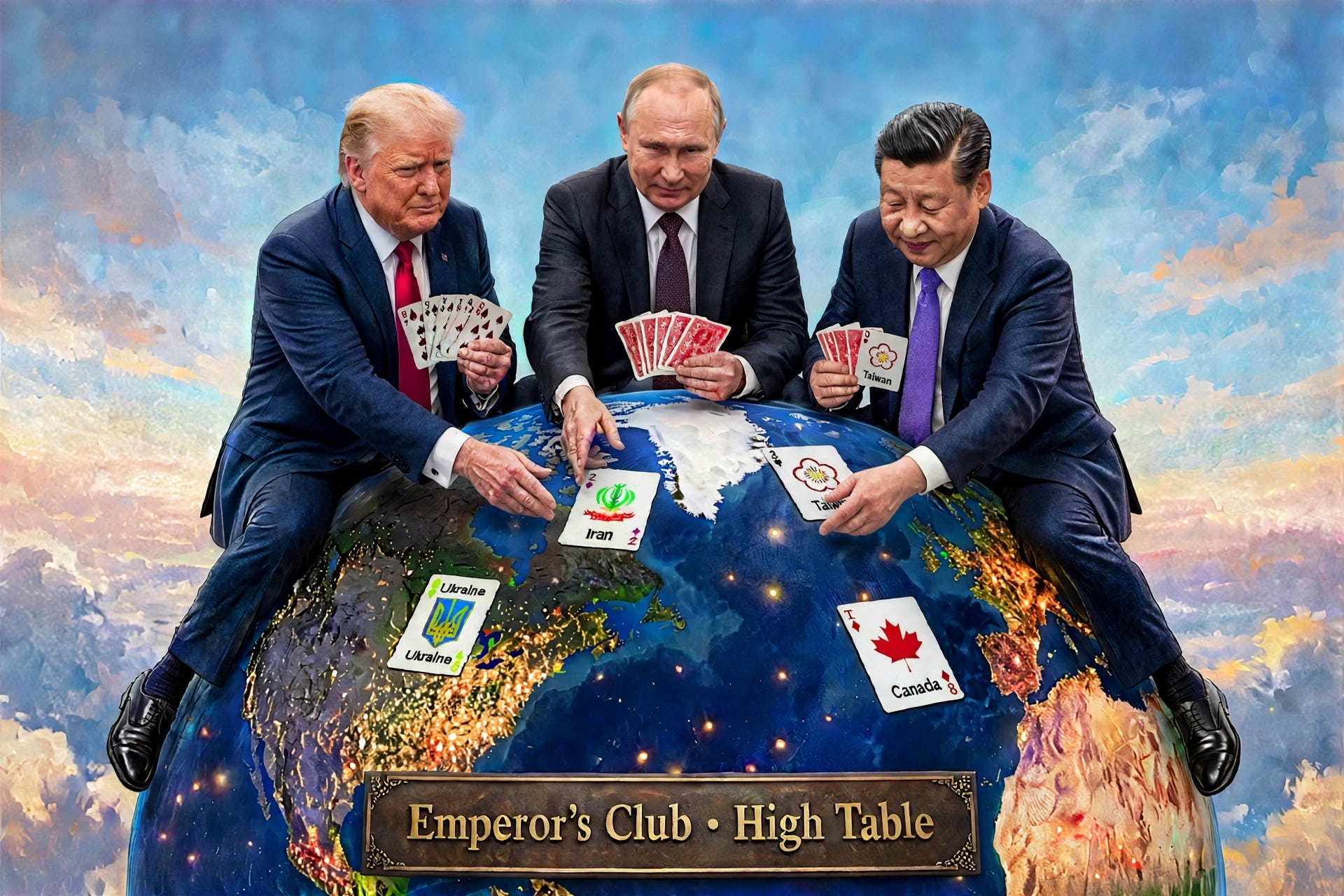
Trump’s recent geopolitical moves suggest a desire to strike a deal with Russia and China over Ukraine and the Middle East. But once the talks convene, who knows what cards will be on the table. Putin wants Ukraine (and the broader Eastern European and Baltic regions), Xi wants Taiwan (and other vast “historic sovereign territory”), and Trump wants Greenland, Canada (and ultimately the rest of the western hemisphere).
Imagine the possible deals and trade offs in this real life version of Risk.
The Roman Way to Rule
The president’s political excesses are less like modern fascism and more akin to the erratic, spectacle-driven reigns of Rome’s most notorious emperors. While modern critics reach for 20th-century fascists like Adolf Hitler or Benito Mussolini to explain Trump’s authoritarian style, history points to Caligula, Nero, and Commodus—men who treated the machinery of state as a personal stage for performance, perception management, and absolute executive impunity.
If you want to understand the nature of the current authoritarian slide, look beyond the overused tropes of rigid military goose-stepping and instead to Rome. The core of the strategy is not the creation of a disciplined fascist monolith, but rather the systematic subversion of constitutional checks and balances in favor of an unchecked, ego-driven executive junta.
Much like Caligula, Trump has systematically challenged established democratic norms, and dominated public discourse through an unpredictable, highly volatile, and media-savvy performance. Both have thrived on spectacle, erratic behavior, and deep-seated vindictiveness against political opponents.
Nero broke all conventions by playing to a massive fanbase, cultivating his political appeal by constantly “performing.” The political elites of his day detested these populist tactics, but a massive segment of the public loved the entertainment —an ancient precursor of the modern political rally or convention. It’s why Trump can say almost anything without risking his base.
“Are you not entertained?”
In the Roman empire, the Senate theoretically had power. But it frequently served as a mere legitimizer of the emperor’s expanding rule, providing a thin patina of legitimacy to blatant power plays. Today, a compliant US legislative majority and a protective Supreme Court shield serve a strikingly similar role, carving out sweeping legal immunities for official presidential acts.
Emperor Augustus also went after the ability to introduce and veto laws, as well as taking command of the army. Until then, military leaders stayed out of domestic affairs, and the Senate was a check on authoritarian challenges. As power was redistributed, Rome’s popular assemblies, a legislative structure that had limited executive authority, became less important.
The emperor even took control over appointments to lower-level executive positions. No citizen could hold office without Augustus’ personal consent. In other words, he gained unfettered power over public institutions by eliminating his critics and repopulating the bureaucracy with loyalists and sycophants.
Trump has been working on all of the above and more, aiming to replace constitutional limits and traditional “checks and balances” with an unchecked executive junta.
Going Personal
America’s tyranny is not one of the more typical kinds. It’s not a military dictatorship or a one-party state, controlled by the leadership of a single political party. Republicans have congressional majorities, but no longer much practical influence. Instead, the nation has drifted into a personalist dictatorship, one controlled by a single individual who claims absolute power, defies the courts, ignores congress, dismantles agencies and institutions, rejects equality and human rights, and enforces his will through fear.
He doesn’t govern, he rules — however it suits him day to day. If he loses one round, after all, it’s one battle after another.
We also have state media in the form of Fox news, Trump TV and other outlets that excuse and rationalize most of it.
Much of this echoes the Roman or Russian empire style. Or if you prefer, old England, when it was just becoming the “British Empire.” In what is known as the Eleven Year Tyranny, from 1629 to 1640, King Charles I was an absolute monarch who paid no attention to parliament. In fact, during the third year of his reign, he dissolved it. Charles had reached a simplistic conclusion: as long as he avoided war, he didn’t need a legislature.
Like Trump, King Charles thought he had the right to make and change laws at will. Assuming he had a divine right to rule, he believed that those who disagreed with him were in contempt of God. Trump settles for demonizing them, and has weaponized the state to enforce his will.
Charles’ refusal to take advice or follow any laws eventually undermined his popularity and led to a horrific civil war, the bloodiest ever fought in Britain. Many imagine one in the US’s future.
It didn’t work out well for Charles. In 1649, he was sentenced to death and beheaded in public. About a century later, in Russia, emperor Peter III was probably assassinated, and, in 1917, Nicholas II, Russia’s last emperor, was gunned down by soldiers with his wife, four daughters, and son before the revolution.
But that’s another column.
Beyond the Abyss: Facing Denial and Dictatorship
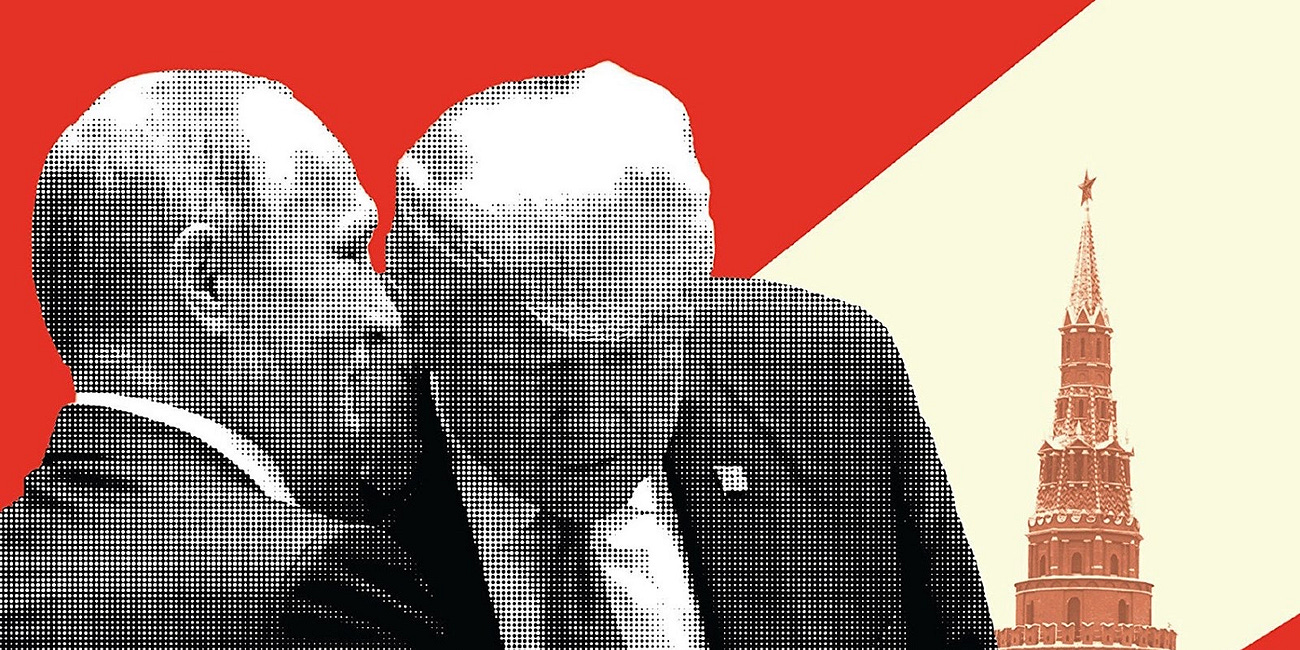
As I was finishing Nuclear War, Annie Jacobson’s troubling book on what the descent into an apocalyptic nuclear exchange might look like, a movie variation aired on Showtime. In the movie, The Sum of All Fears, rookie CIA analyst Jack Ryan, played by a young Ben Affleck, survives a nuclear attack on Baltimore and saves us from World War III at the last …
Let’s end with this: The current movement toward a cynical sort of fascist oligarchy didn’t happen overnight; the road was paved by previous administrations. And follows a familiar historical path. But let’s be frank: the US been an empire for more than a century.
Under Trump, the focus has simply shifted drastically toward unilateralism, intimidation, and an obsession with personal glory and petty payback. Signs point to desperation and panic. Not very imperial.
As the era of American “exceptionalism” winds down, we can feel the wheels of history turning. Looks like uncharted territory ahead. Still, it would help to acknowledge and name what this is — a declining empire. With a weak hand to play.













.png)






.jpg)



 English (US) ·
 French (CA) ·