

 2 months ago
36
2 months ago
36
The true measure of a democracy lies not in the deference it pays to the influential, but in its unwavering capacity to hold those same figures accountable when they transgress the law. While a society may appear stable when its institutions cater to the elite, the actual strength of a democratic framework is revealed only when the shield of status is stripped away by the sword of justice. When the powerful are allowed to operate with impunity, the foundational promise of “equal protection” becomes a hollow platitude, eroding public trust and transforming the rule of law into a mere tool for the preservation of hierarchy. Conversely, a robust democracy asserts its legitimacy by demonstrating that no title, wealth, or political standing provides a sanctuary from legal consequences; it demands that the mechanisms of oversight and prosecution function with blind impartiality. This commitment to accountability serves as the ultimate safeguard against autocracy, ensuring that the social contract remains a binding agreement for all citizens rather than a selective burden for the marginalized. Ultimately, the health of a free state is indexed by the courage of its judiciary and the resilience of its norms in the face of concentrated power.
Across the world, there are nations that have built justice systems strong enough to withstand political pressure, wealth, and influence, proving that the rule of law can be more than a theoretical ideal. In countries such as Japan, South Korea, Singapore, and several Scandinavian states, the institutional culture treats public office as a sacred trust rather than a personal fiefdom, ensuring that officials who abuse their power are investigated, prosecuted, and punished with remarkable speed and efficiency. Their status does not shield them from accountability; instead, it serves as a magnifying glass for their conduct.
In these jurisdictions, the legal framework is often reinforced by a societal “shame culture” or a high degree of transparency that makes corruption politically and socially terminal. In South Korea, for instance, the judiciary has famously prosecuted multiple high-profile cases, signaling to the populace that the executive branch is not above the law. Former presidents have been investigated, tried, convicted, and imprisoned for corruption and abuse of power. In Singapore, anti-corruption laws are enforced rigorously, and public officials know that even the appearance of misconduct can trigger swift investigation. Similarly, the Nordic model thrives on a foundation of extreme institutional trust, where the expectation of integrity is so high that even minor ethical lapses can trigger immediate resignations and legal reviews. By ensuring that the higher an office a person holds, the greater the burden of their accountability, these nations create a stabilizing deterrent against the creep of autocracy and the corrosive effects of cronyism.These countries are not corruption-free, but their institutions possess something that many developing democracies struggle to achieve—a credible certainty that wrongdoing will be punished.
The Philippines presents a painful contrast.
For decades, the nation has been paralyzed by a dual-track justice system where the weight of the law is felt disproportionately by those at the bottom of the social hierarchy. While the state displays efficient, often ruthless, speed when prosecuting the marginalized for “crimes of survival” such as the theft of basic staples like sardines or bread, it exhibits a sudden, systemic lethargy when addressing the grand larceny of the elite. This disparity transforms the courtroom into a theater of the privileged; a hungry man is processed through the system in days, while a high-ranking official accused of plundering billions in public funds can employ a phalanx of high-priced lawyers to exploit every procedural loophole, filing endless motions to quash, appeals, and petitions for bail.
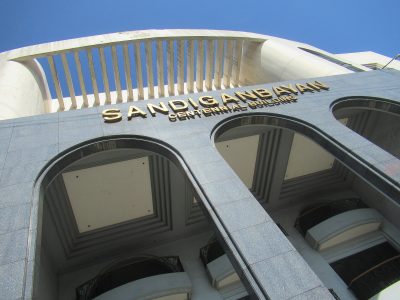
This “culture of impunity” is further reinforced by the physical and social conditions of the accused. While the indigent wait in overcrowded, sweltering jail cells, the powerful often “maneuver” through the system from the comfort of private hospital wings or via “hospital arrest,” citing sudden medical emergencies to avoid standard incarceration. This selective enforcement does more than just delay justice; it fundamentally breaks the social contract. When the public witnesses million-peso plunder cases languishing for decades in the Sandiganbayan or higher courts while petty offenders are swiftly penalized, the law ceases to be a moral authority and instead becomes a tool for the preservation of class interests. This persistent inequity breeds a deep-seated cynicism among the populace, suggesting that in the eyes of the state, the gravity of a crime is measured not by the harm done to society, but by the net worth of the person who committed it.
This double standard has become one of the greatest moral failures of the Philippine justice system.
History provides sobering examples.
The 1986 People Power Revolution did more than just end a regime; it unveiled a staggering financial labyrinth of “ill-gotten wealth” estimated at $5 billion to $10 billion, marking the beginning of one of the world’s most protracted legal recovery efforts. Four decades later, the Presidential Commission on Good Government (PCGG) remains locked in a web of litigation that spans continents and decades. The persistence of these cases in public discourse is a testament to a national psyche still seeking restitution, yet the sheer duration of the proceedings stretching across multiple generations of lawyers and judges serves as a sobering indictment of the Philippine justice system’s vulnerability to “attrition litigation.” The ability of the powerful to utilize interlocutory appeals and technical delays has turned the pursuit of justice into a marathon that many fear will outlive the primary witnesses and the collective memory of the crimes.
.

An iconic photo of the People Power Revolution in the Philippines in February 1986 showing hundreds of thousands of people filling up Epifanio delos Santos Avenue (EDSA). The view is looking northbound towards the Boni Serrano Avenue-EDSA intersection. (Photo taken by Joey de Vera / Fair Use)
.
This systemic struggle was again put to the test by the rise and fall of Joseph “Erap” Estrada. His 2007 conviction for plunder, a capital offense involving the misappropriation of over 4 billion pesos, initially appeared to be a watershed moment for the rule of law, suggesting that the era of presidential immunity had finally ended. However, the subsequent executive pardon granted by President Gloria Macapagal-Arroyo just weeks later fundamentally complicated that victory. While the conviction established a legal precedent for accountability, the swift pardon re-introduced a bitter reality: in a highly transactional political landscape, “justice” is often treated as a negotiable commodity. To many, the pardon did not represent an act of national healing, but rather a strategic political maneuver that signaled to future leaders that even a guilty verdict in the highest court could be undone by the stroke of a political ally’s pen.
More recently, the multibillion-peso Priority Development Assistance Fund (PDAF) scandal, commonly known as the “pork barrel scam,” shocked the nation. The scandal implicated numerous politicians and exposed alleged schemes that diverted public funds into fraudulent organizations. While arrests were made and cases were filed, many Filipinos became frustrated by the slow pace of judicial proceedings and the prolonged uncertainty surrounding final accountability.
These are not isolated incidents. They are symptoms of a deeper institutional problem.
The recurring spectacle of high-profile fugitives evading the reach of the law has become a corrosive “theater of avoidance” that fundamentally undermines the state’s authority. Time and again, individuals facing grave criminal charges ranging from large-scale plunder to human trafficking and extrajudicial killings have managed to vanish just as warrants are issued, often eluding misplaced dragnets or hiding in plain sight within fortified estates. These disappearances are rarely viewed by the public as mere lapses in police work; rather, they are seen as calculated failures. When a well-connected individual evades arrest for months or years, it broadcasts a demoralizing message: that the country’s borders are porous for the wealthy and that law enforcement’s “intelligence funds” are curiously ineffective when directed toward the elite.
This trend of “convenient” escapes fuels a deep-seated suspicion that justice in the Philippines is a negotiable reality, where financial resources and political connections can provide safe houses and early warnings. Each day a fugitive remains at large, the credibility of the Department of Justice and the National Police atrophies. It creates a narrative where the legal system is portrayed as a “spider web” that catches the small flies but lets the great ones break through. Furthermore, the eventual “surrender” of these fugitives is often choreographed as a high-profile media event complete with bulletproof vests and smiling escorts which further mocks the gravity of their alleged crimes. Ultimately, when the state fails to apprehend those who defy its courts, it doesn’t just lose a prisoner; it loses the public’s belief in the very possibility of a fair and equal society.
The consequences are devastating.
The systemic diversion of public funds into private pockets is not a victimless administrative lapse; it is a direct assault on the nation’s human capital and infrastructure. Every peso siphoned through bloated contracts, ghost projects, or kickbacks represents a tangible loss to the Filipino family: a desk not built in a rural classroom, a life-saving ventilator missing from a provincial hospital, or a farm-to-market road that remains a muddy trail, cutting off farmers from economic survival. Corruption acts as a regressive tax on the poor, effectively stealing the “opportunity ladder” from millions of citizens. It forces a child in a crowded public school to learn in an environment that stifles their potential and condemns a patient in a public ward to suffer because the budget for their medicine was traded for a political favor.
This economic hemorrhage is compounded by a profound psychological injury: the death of hope through impunity. When a society repeatedly witnesses a “justice of the few,” where the powerful treat the legal system as a series of negotiable hurdles rather than a binding set of rules, the collective spirit of the citizenry begins to rot into cynicism. This disillusionment is the most dangerous byproduct of corruption; once people stop believing that the system is fair, they stop participating in it with integrity. They may begin to view taxes as a “donation to the corrupt” rather than an investment in the future, and they may turn toward populist or authoritarian alternatives that promise “order” at the expense of liberty. When the rule of law is perceived as a weapon used only against the weak, the very foundation of democracy, i.e., the belief that we are all equal before the law, erodes, leaving behind a fragile state where power, not principle, dictates the future.
A nation cannot prosper when accountability is optional for the elite and mandatory for the poor.
The fundamental challenge facing the Philippine legal landscape is not a scarcity of legislation, but a deficit of application. The country possesses a comprehensive, even sophisticated, array of statutes from the Anti-Graft and Corrupt Practices Act to the Anti-Plunder Law and maintains a sprawling bureaucracy of prosecutors, specialized courts like the Sandiganbayan, and oversight bodies like the Commission on Audit. On paper, the architecture of accountability is robust. However, this structural abundance is often neutralized by a lack of consistent political will and the persistent fragility of institutions under the pressure of partisan interests. In a system where appointments are frequently transactional and budgets are controlled by those subject to oversight, “blind justice” becomes an aspirational concept rather than a functional reality.
Institutional strength is the only viable antidote to the gravity of wealth and influence. When institutions are weak, they behave like reeds in the wind, bending toward whichever administration or tycoon holds the current advantage. True reform requires moving beyond the “personality-driven” justice of a specific leader’s crusade and toward a system where the machinery of the state operates automatically and impartially, regardless of who is in power. This means insulating the National Bureau of Investigation (NBI) and the National Prosecution Service from political interference and ensuring that social status does not dictate the speed of a trial. Until the law is applied with the same mechanical indifference to a senator as it is to a sidewalk vendor, the Philippines will remain a nation of laws that are too often “for show” rather than for justice.
The fight against corruption will never be won through the high-minded rhetoric of speeches, the catchy cadence of slogans, or the cyclical allure of election promises that fade as soon as the ballots are counted. These are merely cosmetic treatments for a systemic disease. The real victory begins only when the psychological landscape of public service shifts from one of entitlement to one of profound risk where every official, from the local barangay level to the highest halls of the legislature, understands that stealing from the people is no longer a high-reward gamble, but a path to swift and certain professional and personal ruin. Accountability must move from being a rare “lightning strike” of bad luck to a reliable, mechanical consequence of wrongdoing.
This transformation requires a visible restoration of the state’s teeth. It will be won when the spectacle of the “vanishing fugitive” is replaced by a law enforcement apparatus capable of tracking and apprehending those who believe their wealth makes them invisible to the state. It will be won when the judiciary sheds its reputation for “attrition litigation,” ensuring that cases are resolved within a timeframe that respects the public’s memory and the victims’ right to closure. Most critically, it will be won when the law is applied with a terrifying equality where the gavel falls with the same weight on a cabinet secretary as it does on a common thief.
Until that day arrives, corruption will not merely persist; it will thrive as a rational choice for the unscrupulous. Each day the status quo remains, the social fabric is further compromised: public trust erodes, civic engagement withers, and the promise of a genuine democracy that promotes a government of, by, and for the people remains a hollow, unfulfilled aspiration. While the maxim “justice delayed is justice denied” is a global legal truth, the Philippine experience has revealed a more sinister evolution: for the powerful, justice delayed has effectively become justice defeated. By dragging proceedings out until witnesses die, evidence is “lost,” or political tides turn, the elite have learned to outrun the law itself, leaving the rest of the nation to bear the cost of their immunity.
*
Click the share button below to email/forward this article. Follow us on Instagram and X and subscribe to our Telegram Channel. Feel free to repost Global Research articles with proper attribution.
Prof. Ruel F. Pepa is a Filipino philosopher based in Madrid, Spain. A retired academic (Associate Professor IV), he taught Philosophy and Social Sciences for more than fifteen years at Trinity University of Asia, an Anglican university in the Philippines. He is a Research Associate of the Centre for Research on Globalization (CRG).
Featured image: Sandiganbayan building (CC BY-SA 4.0)
Global Research is a reader-funded media. We do not accept any funding from corporations or governments. Help us stay afloat. Click the image below to make a one-time or recurring donation.
















.png)






.jpg)



 English (US) ·
  French (CA) ·