

.png) 6 days ago
15
6 days ago
15
PROTECT YOUR DNA WITH QUANTUM TECHNOLOGY
Orgo-Life the new way to the future Advertising by Adpathway
(Family Features) Declining temperatures can bring fun, cool-weather activities, but they also mean cold and flu season is lurking. While everyone hopes to stay healthy, it can be difficult to completely avoid viruses and bugs.
Simple suggestions to help your family plan for cold and flu season.
Dispose of Expired Medicine
Spend some time checking the medications you already have at home. Review the expiration dates and if any need to be thrown out, research how to properly dispose of them according to local government guidelines.
Stock Up
Before cold and flu season, make sure to stockpile must-haves like ginger ale, ice pops and recommended cough suppressants. Thinking ahead means you won’t have to rush out when you or a family member comes down with something.
Practice Healthy Habits
Encourage the entire family to maintain healthy habits such as regular hand washing, following a nutritious diet, drinking plenty of water, and coughing or sneezing into a tissue to help minimize the spread of cold and flu viruses.
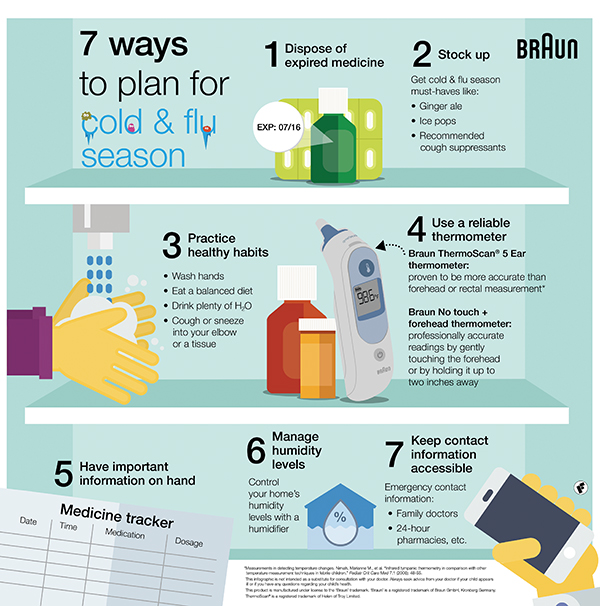

Use a Reliable Thermometer
Reading the temperature of a person who feels ill can help provide confidence and peace of mind. Make sure you have a reliable thermometer like the Braun ThermoScan 5 Ear thermometer, which takes professionally accurate temperature readings via the ear canal and based on a survey, is the number 1 brand recommended by pediatricians who recommend a brand of thermometers.
“It’s important to carefully monitor potential illnesses to make sure children get and stay well, and taking an accurate temperature reading is a necessary part of this process, which is why I trust my Braun thermometer,” Gilboa said. “As a doctor and a mom to four boys, it gives me the confidence to know that I’m accurately taking my child’s temperature before I take any next steps, like administering medication.”
Have Important Information on Hand
To save time when your child is ill, keep a reference of your child’s allergies, prescribed medications, dosage amounts and current weight handy. Health care providers typically need this information to correctly prescribe and dose most medications. Other items to keep on-hand include school sick day policies, operating manuals for medical devices and a reference of temperature readings that classify a fever.
Keep Contact Information Accessible
Keep a list of important phone numbers and addresses inside your medicine cabinet door or on the fridge so they’re easily accessible to family members, babysitters and caretakers. Include your family doctor or local clinic, schools, pharmacists and anyone else you may need to reach in an emergency.
Practice healthy habits
- Eat well: Make sure you eat balanced meals with plenty of fruits and vegetables to keep your immune system strong.
- Stay active: Regular exercise helps boost overall health, even when it’s cold outside! Here are some fun indoor activities to keep kids moving:
- Screen-free options: Play hide-and-seek, build obstacle courses with pillows or dance to music. Jump rope, indoor hopscotch or yoga for kids are also great.
- With screens: Use video-based workouts or dance games that get kids up and moving, like Just Dance or YouTube fitness videos for kids. Apps like GoNoodle offer short, fun movement breaks.
- Sleep: Ensure you get the right amount of sleep (9–12 hours for most school-aged kids).
Flu season is something no family looks forward to, but being prepared can ease the impact it has on your home. With a few practical steps and daily prevention habits, you can better protect your loved ones and respond more confidently when illness strikes. If cold or flu reach your household this winter, it’s always important to consult a doctor if you have any questions regarding the health of your family members. For more information, visit braunthermometers.com.
SOURCE: Braun








.png)






.jpg)



 English (US) ·
  French (CA) ·